

A World First!
Established 2002, we boast the biggest service menu in the world!.
Need that special gift?
Then spoil that special someone with a gift voucher.
It's all for men!
IPL Laser Hair Removal


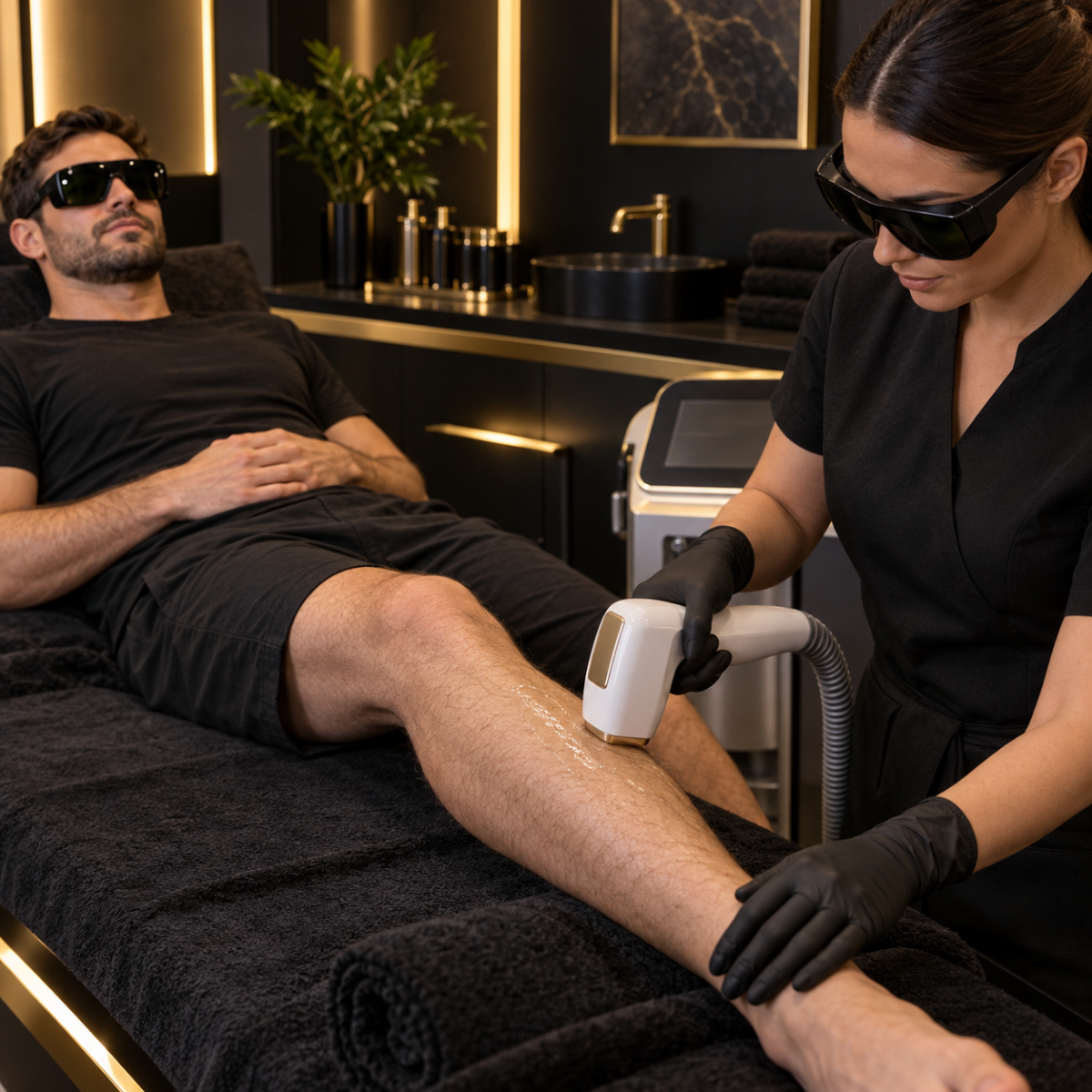
IPL Hair Reduction
Less shaving. Less stubble. More freedom.
If you are tired of constantly shaving, clipping or waxing unwanted face and body hair, IPL can provide a longer-term approach to hair management.
IPL stands for Intense Pulsed Light. Although it is often casually called “IPL laser,” IPL and laser are different technologies. IPL delivers carefully filtered pulses of broad-spectrum light, while a laser produces a single concentrated wavelength.
At Mens Body Works, we use IPL to provide long-term hair reduction. The aim is to progressively reduce the amount, thickness and rate of hair growth—not to promise that every hair will be permanently eliminated.
How Does IPL Hair Reduction Work?
The light emitted by the IPL handpiece is attracted to melanin, the pigment that gives hair its colour. The pigment absorbs the light and converts it into heat, which travels down the hair and damages the follicle responsible for producing it.
This can slow future growth and prevent some treated follicles from producing another hair. Hair that eventually returns may appear finer, lighter or less noticeable.
Because IPL relies on pigment, it works most effectively when there is a clear contrast between the colour of the hair and the surrounding skin.
Who Is IPL Best Suited To?
Our IPL technology is generally best suited to clients with:
-
Fair to medium skin tones
-
Medium-brown to black hair
-
Coarse or clearly pigmented hair
-
Hair that is darker than the surrounding skin
Blonde, white, grey and some red hair contains very little of the pigment needed to absorb the IPL energy and may respond poorly or not at all.
Darker skin contains more melanin, which can also absorb the light intended for the hair. This can increase the risk of burns and unwanted pigmentation changes. Your skin tone, ethnic background, tanning history and individual risk factors must therefore be properly assessed before treatment.
If IPL is not appropriate for your skin or hair, we will tell you honestly and discuss alternative grooming options.
Areas That May Be Treated
IPL can be used to reduce unwanted hair on many areas of the face and body, including:
-
Neck and beard line
-
Cheeks
-
Ears
-
Shoulders
-
Back
-
Chest
-
Stomach
-
Underarms
-
Arms and hands
-
Legs and feet
-
Buttocks
-
Speedo line
-
Selected intimate areas
IPL cannot be used directly over tattoos, and it is not applied to the eyelids, eyebrows or areas too close to the eyes. Unexplained lesions, changing moles or suspicious skin changes must be medically assessed before treatment.
How Many Treatments Will I Need?
IPL only works effectively on hairs that are attached to the follicle and actively growing at the time of treatment. As each hair moves through its growth cycle independently, only a proportion of the hair in an area can be successfully targeted during one appointment.
This is why a course of treatments is required.
We generally recommend planning for an initial course of approximately 8–10 treatments, although some clients and treatment areas may require more. The spacing between appointments will depend on the area being treated and its growth cycle.
Results are influenced by:
-
Hair colour and thickness
-
Skin tone
-
Treatment area
-
Hair density
-
Individual growth cycle
-
Hormonal influences
-
Medication and health history
-
Consistency of appointments
-
Sun exposure
-
The way your hair responds to treatment
A significant reduction may be achieved, but we do not guarantee a particular percentage or promise complete permanent removal. Occasional maintenance treatments may be needed to manage new or returning hair.
What Does IPL Feel Like?
Most clients describe IPL as a quick flash of warmth or a light flick against the skin. Some areas are naturally more sensitive than others, and comfort can vary according to hair density and the part of the body being treated.
The sensation should be brief and manageable. If you experience unexpected or significant pain, you should tell your therapist immediately so treatment can be stopped and the area assessed.
Mild warmth, redness or slight swelling around the hair follicles can occur after treatment and will generally settle as the skin calms.
Your Consultation and Patch Test
IPL is not a one-setting-fits-everyone service. Before beginning, we conduct a consultation to assess:
-
Your natural skin tone
-
Hair colour, thickness and density
-
Recent sun exposure or tanning
-
Medical conditions
-
Prescription and non-prescription medication
-
Supplements and herbal products
-
Previous reactions to light-based treatments
-
Skin conditions, lesions, tattoos and pigmentation in the area
-
Your expectations and preferred outcome
A patch test may be completed before your first full treatment to observe how your skin responds and help determine suitable treatment settings. Another patch test may be needed if your skin tone, medication, health or sun exposure changes during the course.
Appropriate protective eyewear must be worn throughout every treatment.
Preparing for IPL
Before your appointment:
-
Shave the treatment area as directed by your therapist
-
Do not wax, tweeze, thread or epilate the hair during your treatment course
-
Avoid tanning, excessive sun exposure and artificial tanning products
-
Arrive with clean skin free from deodorant, oils, fragrance and moisturiser
-
Tell us about all medications, supplements and topical products you use
-
Advise us of any recent illness, skin reaction or change in your health
-
Do not bleach the hair before treatment, as IPL needs visible pigment to target
Please do not conceal recent sun exposure or medication changes. Something that was safe at your previous appointment may no longer be safe if your skin or health circumstances have changed.
After Your Treatment
Your therapist will provide aftercare instructions based on the area treated and your skin’s response.
You may be advised to:
-
Keep the area cool and avoid excessive heat
-
Avoid hot showers, saunas, spas and strenuous exercise temporarily
-
Avoid fragranced or irritating products until the skin settles
-
Protect exposed areas from direct sunlight
-
Apply broad-spectrum SPF 30 or higher
-
Allow treated hairs to shed naturally
-
Avoid picking, scratching, waxing or tweezing the area
Treated hair does not disappear immediately. It may appear to continue growing before gradually shedding over the following days or weeks.
When Treatment May Be Postponed
IPL may need to be postponed or may not be suitable if you have:
-
Recently tanned or sunburnt skin
-
Fake tan on the treatment area
-
An active infection, cold sore, rash or open wound
-
A photosensitive health condition
-
Medication or supplements that increase sensitivity to light
-
An unexplained or changing lesion
-
A tattoo directly within the treatment area
-
A history of unusual reactions to light-based treatments
-
A medical condition affecting healing
Treatment is generally postponed during pregnancy and breastfeeding. Medical clearance may also be requested where appropriate.
Begin With a Complimentary Consultation
Every client, skin tone and pattern of hair growth is different. A complimentary consultation allows us to assess your suitability, answer your questions and create a realistic treatment plan.
Call Angie on 03 9429 5400 or book your consultation online.
Mens Body Works
 267 Bridge Road, Richmond, Melbourne, 3121
 +61 3 9429 5400
  +61 3 9421 4031