

A World First!
Established 2002, we boast the biggest service menu in the world!.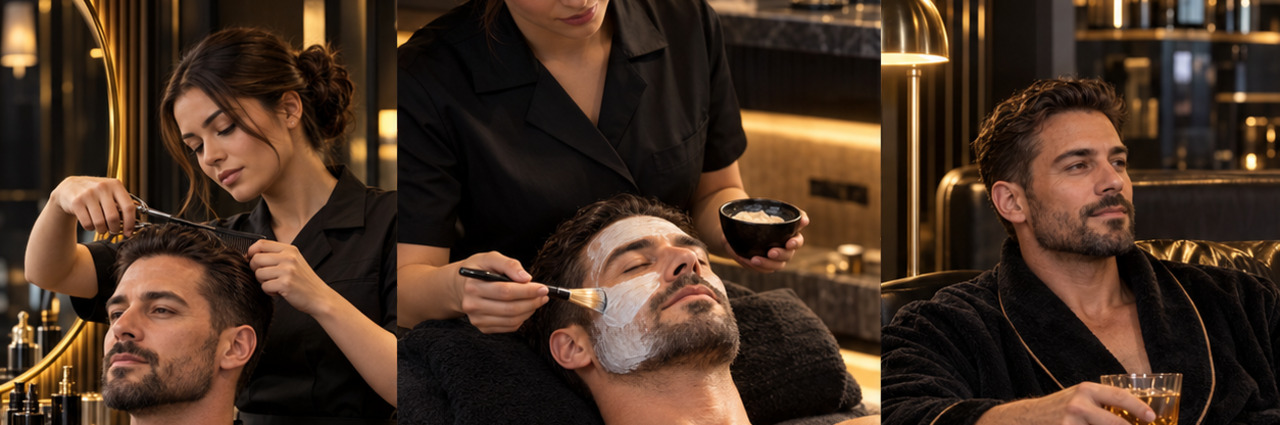
Need that special gift?
Then spoil that special someone with a gift voucher.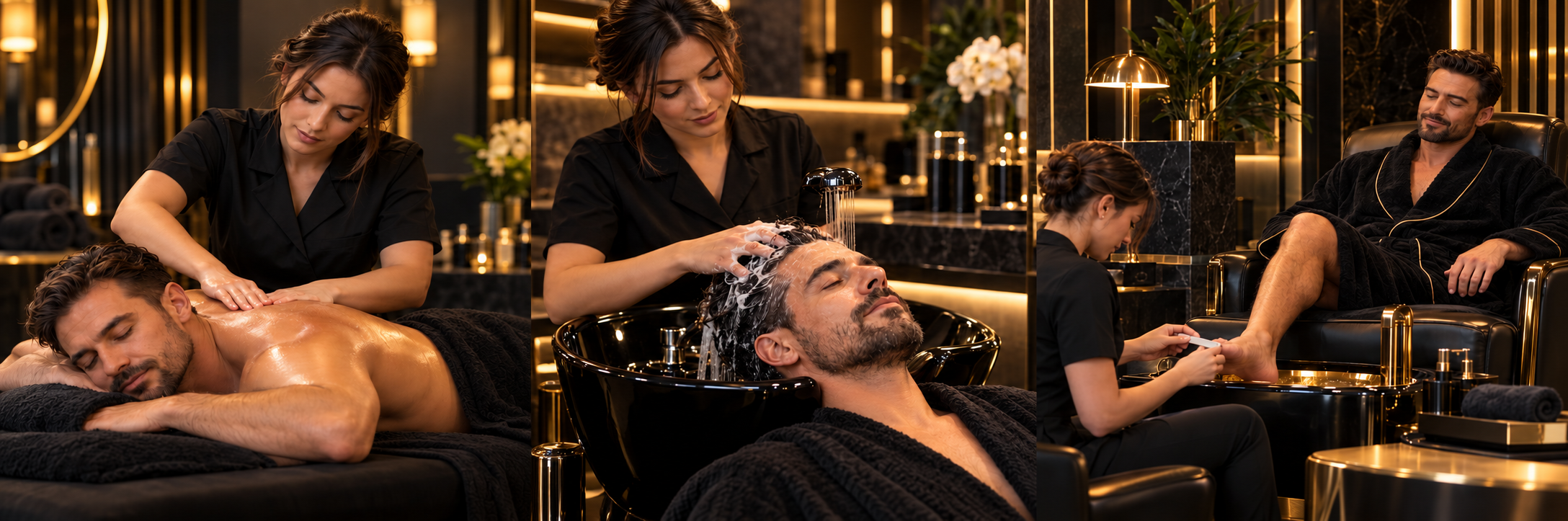
It's all for men!
LED Light Treatment


LED Scalp Therapy
Non-Invasive Support for Thinning Hair and Scalp Wellness
Hair thinning can affect confidence at any age, but there is rarely one single cause. Genetics, hormonal changes, illness, stress, medication, nutritional deficiencies, scalp disorders and normal ageing can all influence the hair-growth cycle.
LED Hair & Scalp Therapy is a comfortable, non-invasive treatment using carefully selected red and near-infrared wavelengths. Also known as photobiomodulation or low-level light therapy, it may support the activity of existing hair follicles and improve the appearance of hair thickness and density in suitable clients when used consistently.
It involves no needles, incisions or chemicals and generally requires no recovery time.
How Does LED Scalp Therapy Work?
Red and near-infrared light are delivered to the scalp at controlled wavelengths, intensity and exposure time.
Red light is visible, while near-infrared light is invisible. Neither is ultraviolet light, and the treatment is not designed to burn, tan or remove hair.
Photobiomodulation is thought to influence cellular activity and signalling within and around functioning hair follicles. Research suggests that appropriate light therapy may help some follicles remain in—or return to—the active growth stage of the hair cycle.
The exact response depends on:
-
The cause and stage of hair loss
-
Whether viable follicles are still present
-
The wavelengths and energy delivered by the device
-
Treatment frequency and consistency
-
Age, health and medication history
-
Other hair-loss treatments being used
-
Ongoing genetic or hormonal influences
Not every red-light device is equivalent. Professional treatment parameters and consistent use are important.
Who May Benefit?
LED Hair & Scalp Therapy may be considered for clients experiencing:
-
Early-stage hereditary or pattern thinning
-
Gradual reduction in visible hair density
-
Hair that appears progressively finer
-
A widening part or increasingly visible scalp
-
Receding areas where functioning follicles remain
-
A desire for non-invasive support alongside a broader hair-care plan
-
Post-hair-transplant care once cleared by the treating surgeon
The evidence is strongest for some cases of androgenetic alopecia—commonly known as male or female pattern hair loss. Other types of hair loss require individual medical diagnosis and may not respond to LED therapy.
Potential Benefits
When appropriate professional equipment and a consistent treatment schedule are used, LED scalp therapy may:
-
Support the activity of existing hair follicles
-
Improve the appearance of hair thickness or density in some clients
-
Complement an established hair-loss management plan
-
Provide broad, even exposure across thinning areas
-
Offer a comfortable treatment without needles or skin penetration
-
Require little or no interruption to normal daily activities
-
Provide a calm and relaxing scalp-care experience
Results cannot be guaranteed, and not everyone will respond in the same way.
What LED Therapy Cannot Do
LED Hair & Scalp Therapy is not a miracle cure and should never be presented as one.
It cannot:
-
Create entirely new hair follicles
-
restore follicles permanently destroyed by scarring
-
Guarantee that lost hair will return
-
Reverse advanced baldness in a single treatment
-
Diagnose the cause of hair loss
-
Correct nutritional, hormonal or medication-related hair loss
-
Cure alopecia areata or other autoimmune conditions
-
Replace medical assessment or prescribed treatment
-
Permanently stop the natural ageing process
If hair loss is caused by an underlying medical condition, that condition must be identified and appropriately managed.
What Happens During the Treatment?
Your appointment begins with a consultation and scalp assessment. We will discuss when the thinning began, whether it developed gradually or suddenly, your family history, relevant medical conditions, medications, supplements and any previous hair-loss treatments.
For treatment:
-
The scalp and hair must be clean, dry and free from heavy styling products.
-
The hair may be sectioned to improve light exposure to the scalp.
-
Protective eyewear is fitted and must remain in place throughout the session.
-
The LED unit is positioned at the correct distance from the treatment area.
-
Red and near-infrared light are delivered according to the selected protocol.
-
You can relax comfortably while the treatment is completed.
The exposure time and recommended course will depend on the device protocol, your scalp and the reason treatment is being considered.
What Does It Feel Like?
LED scalp therapy is generally comfortable and painless. You may notice the brightness of the red light through your protective eyewear or experience gentle warmth from the equipment, but the treatment should not feel hot or uncomfortable.
Please tell your therapist immediately if you experience unusual heat, pain, headache, dizziness, skin irritation or eye discomfort.
How Many Treatments Will I Need?
LED therapy is not a one-off solution. Hair grows slowly and follows a biological cycle measured in months, so consistency is essential.
A regular course of treatments is usually required before any meaningful change can be assessed. If improvement occurs, ongoing maintenance sessions may also be recommended because hereditary hair loss and ageing continue over time.
We may use baseline photographs taken under consistent lighting to monitor progress objectively. Results should not be judged after only one or two appointments.
Some clients may notice a change in shedding or hair quality before seeing a visible improvement in density. Others may experience little or no change. We will review your progress honestly rather than promising a result that cannot be guaranteed.
Does LED Treat Dandruff, Itching or an Oily Scalp?
LED Hair & Scalp Therapy is not a primary treatment for dandruff, persistent itching, excessive oil production or inflammatory scalp disease.
Flaking and itching can have many causes, including seborrhoeic dermatitis, psoriasis, eczema, fungal infection, product irritation or an allergic reaction. These concerns need to be identified correctly rather than simply treated as “dandruff.”
Treatment will be postponed if the scalp is significantly inflamed, infected, broken or medically unexplained.
Can It Be Combined With Other Treatments?
LED may be used as one component of a broader hair and scalp plan. Depending on professional advice, this may include:
-
Appropriate home scalp care
-
Professional cleansing or scalp treatments
-
Changes to damaging grooming practices
-
Medical investigation of sudden or excessive shedding
-
Dermatologist-prescribed treatment
-
Nutritional support where a diagnosed deficiency exists
-
Post-transplant care with the surgeon’s approval
LED should complement appropriate care rather than delay medical diagnosis or replace proven treatment.
When Should You Seek Medical Advice First?
Please consult a doctor or dermatologist before cosmetic scalp treatment if you have:
-
Sudden or rapidly increasing hair loss
-
Smooth, round or patchy bald areas
-
Pain, burning, sores or bleeding
-
Significant redness, scaling or inflammation
-
Scarring or shiny areas where follicle openings are no longer visible
-
Hair loss following a new medication
-
Hair loss associated with illness, unexplained weight change or extreme fatigue
-
Loss of eyebrows, eyelashes or body hair
-
A changing mole or unexplained scalp lesion
Early medical assessment can be important because some forms of hair loss can become permanent if diagnosis is delayed.
Safety and Suitability
LED therapy may need to be postponed or require medical clearance if you:
-
Have a condition that causes sensitivity to visible light, such as lupus
-
Take medication or supplements that increase light sensitivity
-
Have photosensitive epilepsy or seizures triggered by light
-
Have an active scalp infection, open wound or severe inflammatory flare
-
Have a history of skin cancer or an unexplained lesion in the treatment area
-
Have recently undergone scalp surgery or a hair transplant
-
Are pregnant or breastfeeding
-
Have an eye condition or have recently undergone eye surgery
-
Have previously experienced an unusual reaction to light-based treatment
Please disclose all prescribed medication, over-the-counter products and supplements—including herbal products such as St John’s Wort—during your consultation.
Protective eyewear must be worn for every treatment.
A Realistic Approach to Hair Loss
Our aim is to help you make an informed decision based on the condition of your scalp, the pattern of your thinning and what LED therapy can realistically achieve.
We will never promise a full head of hair, present one treatment as a cure or encourage you to delay medical investigation. Where LED is appropriate, it can become a comfortable and convenient part of a carefully considered hair and scalp program.
Contact Mens Body Works on 03 9429 5400 to arrange your LED Hair & Scalp Therapy consultation.
Mens Body Works
 267 Bridge Road, Richmond, Melbourne, 3121
 +61 3 9429 5400
  +61 3 9421 4031