


A World First!
Established 2002, we boast the biggest service menu in the world!.
Need that special gift?
Then spoil that special someone with a gift voucher.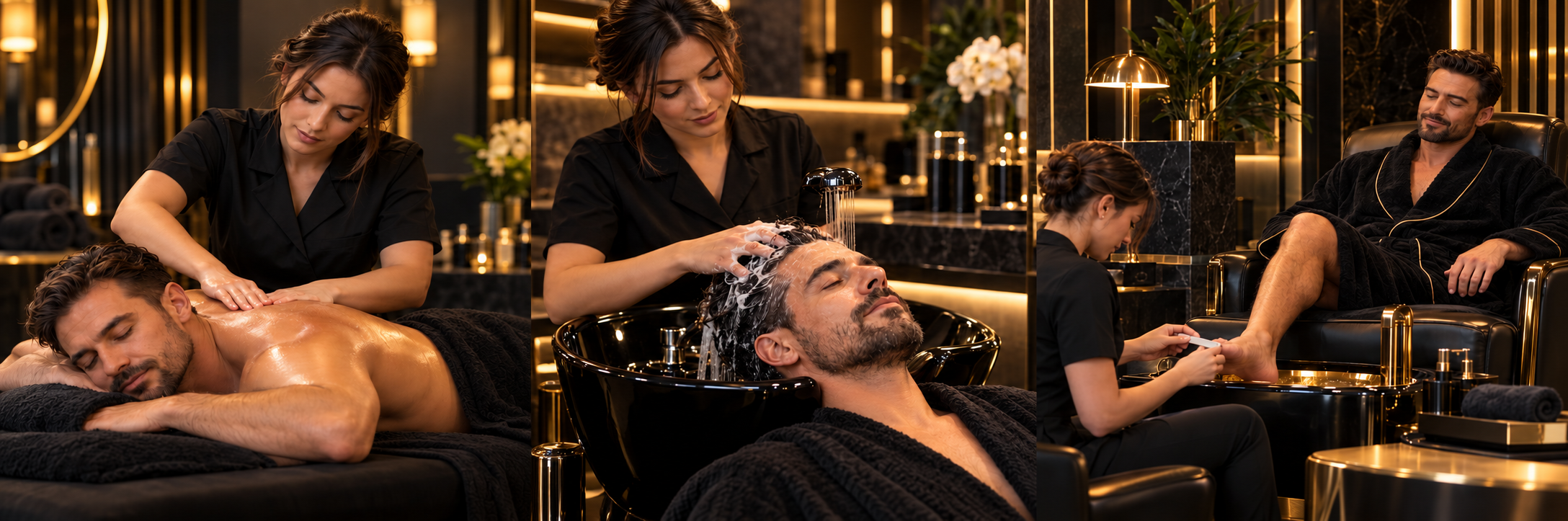
It's all for men!
Microneedling versus Microdermabrasion


Microneedling vs Microdermabrasion
Which treatment is right for your skin?
Microneedling and microdermabrasion can both improve the appearance of the skin, but they work at very different depths and are suited to different concerns.
If your skin needs a quick surface refresh, microdermabrasion may be the better choice. If you are concerned about acne scarring, persistent texture or fine lines, microneedling may provide a more targeted approach. A professional consultation will help us assess your skin and recommend the most appropriate treatment.
What is microneedling?
Microneedling is a minimally invasive procedure that uses a professional device containing very fine, sterile needles. The device creates controlled microchannels in the skin, prompting its natural repair response and supporting the gradual production of collagen.
Microneedling may help improve the appearance of:
-
Depressed acne scarring
-
Fine lines
-
Uneven skin texture
-
Enlarged-looking pores
-
Certain scars and stretch marks
-
Early loss of firmness
Results develop progressively as the skin renews itself. A course of treatments may be recommended depending on your skin, the concern being treated and the result you hope to achieve.
Microneedling should not be performed over active, inflamed acne, open wounds, infections or irritated skin.
What is microdermabrasion?
Microdermabrasion is a non-invasive resurfacing treatment that works on the outermost layer of the skin. A specialised diamond-tip or exfoliating handpiece gently removes accumulated dead skin cells while controlled suction lifts away surface debris.
It is particularly suited to skin that appears:
-
Dull or tired
-
Rough or uneven
-
Mildly congested
-
Dry or flaky
-
Affected by superficial discolouration
-
In need of a fresh, polished appearance
Microdermabrasion can leave the skin feeling smoother and looking brighter with little interruption to your day. Its effects are more superficial and temporary than microneedling, so regular maintenance treatments may be recommended.
What is the difference?
| Microneedling | Microdermabrasion | |
|---|---|---|
| Treatment depth | Works below the surface through controlled microchannels | Exfoliates the outermost skin layer |
| Best suited to | Acne scarring, persistent texture, fine lines and collagen support | Dullness, roughness, mild congestion and surface refinement |
| Sensation | Prickling, warmth or mild discomfort | Gentle scratching and light suction |
| Expected recovery | Redness, warmth and sensitivity for several days | Mild pinkness or sensitivity, usually settling quickly |
| Results | Develop gradually over several weeks | Skin often feels smoother and fresher soon after treatment |
| Treatment planning | Usually performed as a carefully spaced course | Can be included regularly as a maintenance facial |
Which is better for acne scarring?
Microneedling is generally the more appropriate option for depressed or indented acne scars because it works below the skin’s surface and supports a collagen-remodelling response.
Microdermabrasion may soften very mild surface irregularities and improve overall smoothness, but it cannot remodel deep acne scars.
Raised, thickened or keloid scars require medical assessment and should not be treated as ordinary acne scarring. Active, painful or inflamed acne must also be brought under control before microneedling is considered.
Which is better for fine lines?
Both treatments may improve the appearance of fine lines, but they do so differently.
Microdermabrasion removes dull surface cells, helping the skin appear smoother and more luminous. This makes it ideal when you want a gentle refresh with minimal downtime.
Microneedling is selected when the aim is a more progressive response. By supporting the skin’s natural repair process, it may gradually improve fine lines, texture and firmness.
Can the treatments be performed at home?
At-home rollers and exfoliating devices do not provide the same control, hygiene or professional skin assessment as an in-clinic treatment. Incorrect pressure, excessive use or poor hygiene may cause irritation, infection, scarring or unwanted pigmentation.
Professional treatment allows the device, intensity and treatment plan to be selected according to your skin rather than relying on a one-size-fits-all approach.
When should treatment be postponed?
Please tell your therapist if you have:
-
Active or inflamed acne
-
A cold sore or other skin infection
-
Sunburn, open wounds or broken skin
-
Eczema, dermatitis or rosacea that is currently flaring
-
A history of keloid or raised scarring
-
Problems with healing or immunity
-
Recently used isotretinoin or other prescribed skin medication
-
A mole or skin lesion that is changing, bleeding or has not been medically assessed
Where necessary, we may recommend obtaining medical advice before proceeding.
Aftercare
Following either treatment, protect your skin carefully and follow the personalised instructions provided by your therapist.
After microneedling:
-
Avoid makeup for at least 24 hours
-
Avoid strenuous exercise, swimming, saunas, steam rooms and excessive heat until the skin has settled
-
Use a gentle cleanser and recommended moisturiser
-
Avoid retinoids, acids, scrubs and other active products until advised
-
Apply broad-spectrum SPF 50+ and limit direct sun exposure
After microdermabrasion:
-
Keep the skin moisturised and avoid unnecessary heat or friction
-
Temporarily discontinue scrubs, acids and retinoids as advised
-
Apply broad-spectrum SPF 50+ every day
-
Avoid picking or over-exfoliating the freshly treated skin
Still unsure which treatment to choose?
You do not need to decide alone. During your consultation, we will consider your skin condition, sensitivity, treatment history, available recovery time and desired result before recommending the most suitable option.
Call Mens Body Works on 03 9429 5400 to arrange your consultation.
Mens Body Works
 267 Bridge Road, Richmond, Melbourne, 3121
 +61 3 9429 5400
  +61 3 9421 4031